
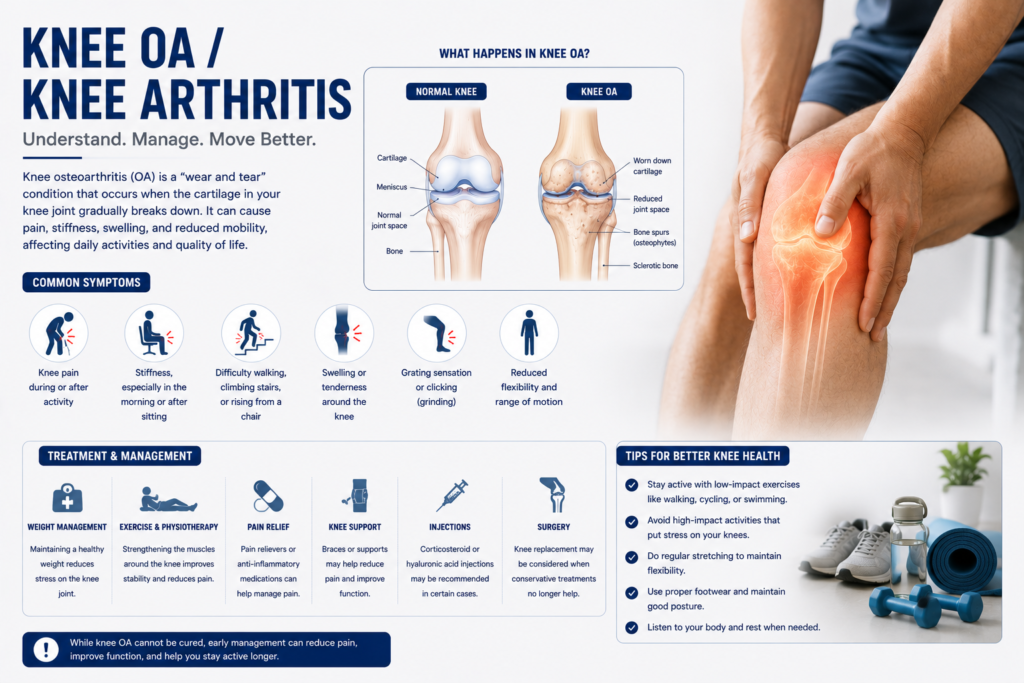
Knee OA / Knee Arthritis
Knee OA can involve multiple pathophysiological changes such as cartilage degradation, bony adaptations, meniscal damage, and synovial inflammation.
There are three main contributors to the pain experienced by people with osteoarthritis of the knee.
1. The first is the periosteum. The periosteum is a thin tissue that wraps around the bone. It supplies blood to the bone, and it does have nerve endings. Anyone who has broken a bone knows this very well. It is the tearing of the periosteum that leads to a lot of the pain.The first is the periosteum. The periosteum is a thin tissue that wraps around the bone. It supplies blood to the bone, and it does have nerve endings. Anyone who has broken a bone knows this very well. It is the tearing of the periosteum that leads to a lot of the pain.
2. The second issue that can cause knee pain and swelling is the synovium. The synovium is the lining of the knee joint. It’s like a balloon that surrounds the bones of the knee. There are many nerve endings there. Synovitis can be a very painful process. As an aside, for people with pain due to synovitis that does not respond to time, ice, heat, medications. red and angry periosteum.
3. The third contributor to pain in an arthritic knee is edema or inflammation in the bone itself. This occurs more often in women because of some degree of osteopenia or osteoporosis. That makes the bone a little weaker. So when the cartilage thins, the cushioning is also thinning. Less cushioning may cause increased stress in the bone, which can cause edema. Bone marrow edema can cause a deep, intense ache.
Why Rehab?
Rehabilitation is essential for patients with Knee Osteoarthritis as it helps reduce pain and swelling, improve joint flexibility, and strengthen the muscles that support the knee. This reduces stress on the joint, enhances balance and walking stability, and helps patients maintain mobility and independence in daily activities. Effective rehab can also slow disease progression and potentially delay the need for surgery, improving overall quality of life.
Recovery Time
We aren’t sure how long it take to recover from the knee pain, but we strategize to help patients remain active with knee arthritis, you’re not wearing your knee joint out by exercising. Walking or playing tennis, as long as the pain is mild, is not going to shorten the lifespan of your knee. Quite the opposite! The stronger your legs are, the more flexible you are, the more active you are, the longer you will go before needing to consider surgery.
Treatment Approach
Patellofemoral and tibiofemoral joint mobility
Functional training: sit to stand, step up, lunges
Taping technique
Make An Appointment with us today !
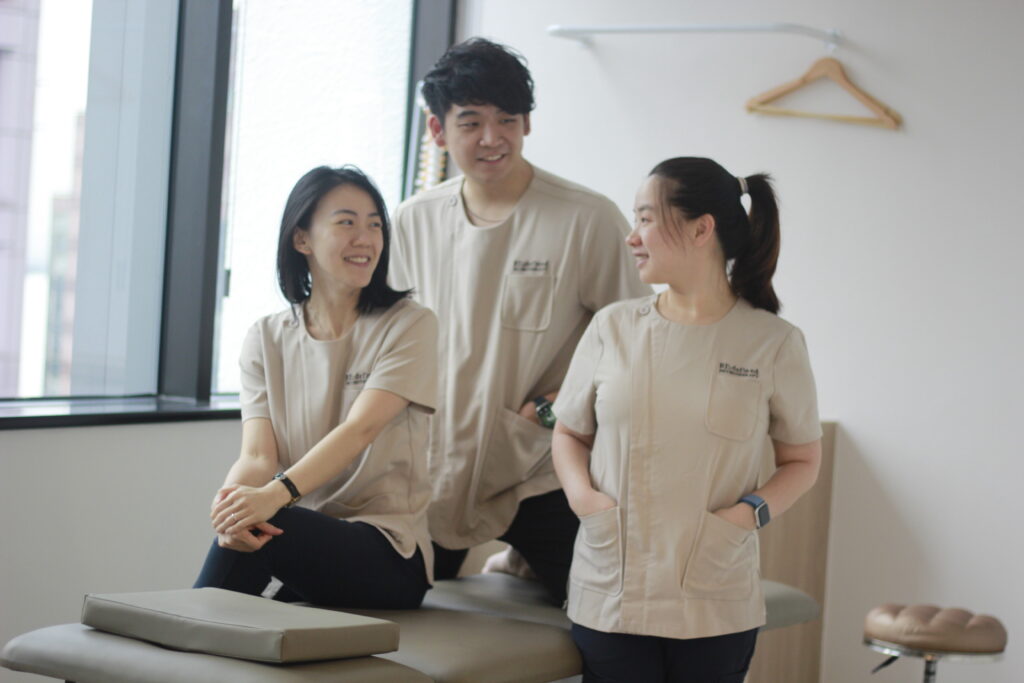
Redefined Physio Kuala Lumpur (KL)
- Level 25.1 Menara AIA Sentral, No. 30, Jalan Sultan Ismail, 50250 Kuala Lumpur.
- +6012-841 2623
- redefinedphysio23@gmail.com

Redefined Physio Petaling Jaya (PJ)
- R-G-01T, Pusat Perdagangan Dataran Atwater, Jalan Professor Diraja Ungku Aziz, Seksyen 13, 46200 Petaling Jaya, Selangor
- +6012-389 2623
- redefinedpj@gmail.com