
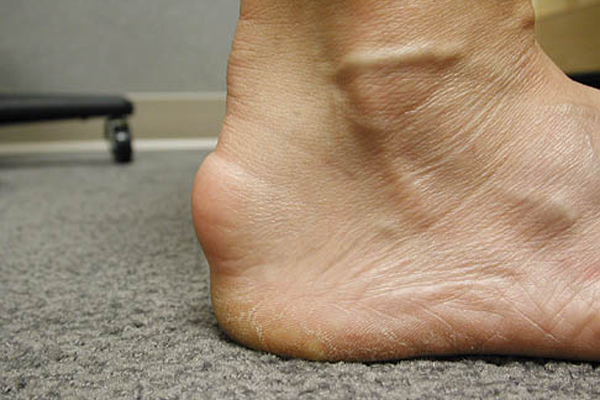
Achilles Tendinitis
It’s also important to understand typical tendon behaviour; tendons are often painful initially, but actually feel better with some warm-up. However, the pain usually increased the day following loading. Does the area feel better once warmed up? Does it feel worse the next day? If the answers to these questions are yes, we are likely dealing with tendon related pain. If not, consider other causes.
Typically, patients with mid-portion Achilles tendinopathy experience pain with hopping, but not with slow, controlled calf raises. On the other hand, those with insertional Achilles tendinopathy experience pain with deficit calf raises. If the patient does not experience pain in any of these loading activities, it may be unlikely they have a true Achilles tendinopathy.
Why Rehab?
Because a thorough assessment will help to get a baseline of your patient’s function and irritability, as well as ensuring you are actually dealing with a true Achilles tendinopathy and not another cause of posterior ankle pain. Providing our patients with the right tools and strategies in their rehab journey sets them up to recover quickly and come back even stronger, also to stop patient going into a chronic tendinopathy which the management can be notoriously challenging.
Recovery Time
Rehab and management of the Achilles requires an understanding of the athlete’s activity schedule, current capacity, and goals. For in-season athletes, we focus on keeping symptoms low through the use of isometric and isotonic training, as well as modifying aggravating activities where possible. Once athletes have a break, we go beyond isotonic training with progressive plyometric drills that aim to build them back up for sport. This whole process requires an intimate understanding of your athlete’s activity and close monitoring of feedback from high tendon load activities. These same practical principles can be applied with any non-athletic populations experiencing Achilles tendinopathy.
Treatment Approach
Phrase 1: Isometrics
Phrase 2: Isotonics
- Phase 3: Energy storage
- Phase 4: Energy storage and release
- Cross friction/horizontal friction massage technique: mid portion tendinopathy & insertional tendinopathy
- Kinesiotaping
- Dry needling: gastrocnemius and soleus muscle group